How to parallel park easily with zero stress. Learn expert tips, step-by-step guidance, and confidence-boosting tricks to park like a pro today
How to Parallel Park Easily – A Beginner’s Guide You’ll Actually Use 🚗
Ever felt your heart race when trying to parallel park? 😬 You’re not alone. It’s like threading a needle while everyone watches.
Here’s the good news: You can master parallel parking with a few simple steps. Just a little practice and the right mindset. No complicated angles or guessing needed.
Let’s break it down and make you feel confident behind the wheel. 💪
🚘 What Is Parallel Parking, Really?
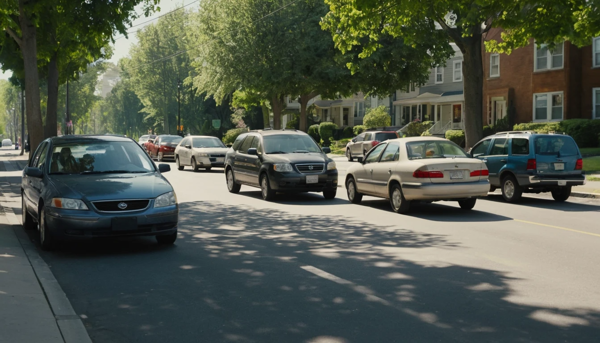
Parallel parking means parking your car in line with others, between two cars and parallel to the curb. It’s a skill most drivers dread, but it’s learnable.
It feels hard because of bad instruction, unclear angles, and pressure. But with the right technique and practice, it becomes easy.
🧠 Understand the Goal First
Before you start, know your goal:
You’re trying to fit your car into a tight space safely. No need for perfection. Just aim for clean, safe, and centered.
📏 Know the Right Distance to Start
One big mistake is not starting in the right spot. Here’s what to do:
- Pull up parallel to the car in front of the space
- Keep about 2–3 feet of space between your car and theirs
- Make sure your rear bumpers are aligned
👉 Starting in the right spot makes parking easier.
🕹️ Step-By-Step Parallel Parking Instructions
Follow these 6 simple steps:
- Align your vehicle beside the front car, about 2–3 feet away.
- Shift to reverse. Begin turning your wheel sharply toward the curb (usually right).
- Reverse slowly into the space until your car is at a 45-degree angle.
- Straighten the wheel and continue backing up slowly.
- Turn the wheel away from the curb (usually left) once your front bumper clears the car ahead.
- Adjust forward or backward slightly if needed to center your car.
TIP: Watch your side mirrors and don’t rush. Parking is not a race. 🐢
🔄 The Mirror Trick You’ll Wish You Knew Sooner
A clever hack: Use your side mirror as a guide. When you see the rear bumper of the car behind you in your passenger-side mirror, start turning the steering wheel away from the curb.
This trick removes the guesswork and boosts your confidence every time. 💡
📊 Best Parking Angles for Standard Car Sizes
| Car Size | Ideal Starting Distance | Best Steering Angle |
|---|---|---|
| Compact Sedan | 2 feet | 45° entry angle |
| Mid-Size SUV | 2.5 feet | 50° entry angle |
| Full-Size Truck | 3 feet | 55° entry angle |
Use these angles as a baseline. With practice, you’ll fine-tune what works best for your vehicle.
💨 Practice Without Pressure First
Let’s be real: parallel parking on a busy street is not the place to start. Try this instead:
- Use cones or cardboard boxes to simulate parked cars
- Practice in a quiet parking lot with lots of space
- Start by just learning the angles, not perfection
Once you feel the motion, your brain starts to memorize the movement pattern. That’s when the magic happens.
😎 Parking Confidence Comes From Muscle Memory
Here’s what most people forget: Confidence doesn’t come from “knowing” the steps. It comes from doing them again and again until your body takes over.
Set a goal: 10 practice sessions, 3–5 minutes each. That’s all. You’ll surprise yourself with how fast you improve.
🚦Parallel Parking on a Hill? Here’s What to Do
Yes, it’s trickier—but not by much.
Uphill with curb:
- Turn your wheels away from the curb
- Let your car roll gently back until the tire touches the curb
Downhill with curb:
- Turn your wheels toward the curb
- Let it rest gently against the curb before shifting to park
No curb? Always turn wheels toward the side of the road. Safety first.
🔐 Don’t Forget to Secure Your Car After Parking
After a perfect park, make sure to:
- Put the car in park (or gear for manual)
- Engage the parking brake
- Turn off the engine
- Check for clearance before exiting
This locks everything in and prevents accidental roll.
🧾 Common Mistakes to Avoid (And How to Fix Them)
| Mistake | Fix |
|---|---|
| Turning too late | Begin turning as soon as you start reversing |
| Hitting the curb | Go slower; stop and adjust before hitting |
| Ending too far from curb | Re-center by pulling forward and repeating step 5 |
| Forgetting to signal | Always signal before pulling alongside other cars |
| Rushing the maneuver | Take your time—confidence grows with calm movements |
💭 What If There’s a Tight Spot? Can I Stil Park?
Yes—tight spots just mean more precise entry and exit. Try these steps:
- Pull forward slightly more to create better reverse angle
- Use both side mirrors to track bumper distance
- Inch in slowly and adjust as needed
With practice, even small spots will feel manageable.
✅ Key Takeaways
- Start with alignment. Get your distance right before anything else.
- Follow the six steps to guide your car into the spot.
- Use mirrors to reduce guesswork and increase precision.
- Practice is your best friend. Confidence comes from repetition.
- Stay calm. Nobody starts as a parking pro—everyone learns.
⚡ Quick Answers
What’s the easiest way to learn parallel parking?
Start in an empty lot with cones, follow a step-by-step guide, and practice 10–15 times.
How do I stop hitting the curb when parking?
Turn your wheel earlier and go slower. Watch your mirrors closely for spacing.
How much space do I need to parallel park?
Ideally, your car’s length plus 3 feet. Some can manage tighter with precision.
Why do I always end up far from the curb?
You’re likely not turning the wheel enough or soon enough—adjust your entry angle.
How do I fix a bad parking job?
Pull forward slightly, realign your wheel, and reverse in again slowly.
🔍 Deep Comparisons: Parallel vs Other Parking Types
| Parking Type | Difficulty Level | Space Needed | When to Use |
|---|---|---|---|
| Parallel | High | Long + narrow | Street parking between cars |
| Perpendicular | Medium | Wide space | Parking lots |
| Angle | Low | Angled slots | Diagonal public parking areas |
Parallel parking is the most complex—but the most useful for city driving.
🙋♀️ FAQs
How do I parallel park between two cars easily?
Align beside the front car, back in at a 45° angle, then adjust as needed. Practice makes it second nature.
What’s the best way to know when to turn the wheel?
Use visual cues—like when your rear bumper aligns with the front car’s back wheel.
Can I parallel park without hitting the curb?
Yes! Go slow, use mirrors, and stop to readjust if needed.
How do I know if my car fits in a parking space?
Your car’s length plus 2–3 feet is usually enough. If unsure, don’t force it.
What should I do if there’s traffic behind me?
Stay calm, signal early, and park at your pace. They can wait—it’s better to be safe.
🏁 Final Thoughts: You Can Parallel Park Like a Pro
Parallel parking doesn’t have to be scary. With a few tricks and practice, you’ll park like a pro. 🚖
Remember, every expert started as a beginner. Keep trying, be kind to yourself, and celebrate your small wins. You can do it. 👊
Reference Links:
https://www.dmv.org/how-to-guides/parallel-parking.php
https://driving-tests.org/beginner-drivers/how-to-parallel-park/
https://www.nhtsa.gov/road-safety/parking-tips-for-new-drivers